Industry Business Advisor — J. J. Keller & Associates, Inc.
How Video Telematics Reduces Fleet Risk: 10 Practical Ways to Improve Safety
Reduce fleet risk and improve safety outcomes by combining video telematics with real-time driver data for smarter, proactive decision-making.
Published On: 06/01/2026

Written by:
Tim Adam
For years, fleet risk management has relied heavily on data. But data alone only tells part of the story. Without context, it's difficult to fully understand what's happening on the road.
By combining video telematics with vehicle data, fleets gain full visibility into driver behavior, road conditions, and critical safety events. The result is better decisions, fewer crashes, and stronger protection for drivers and the business.
When used correctly, video telematics isn't about surveillance. It's about prevention. Below are ten proven ways fleets can reduce risk while improving safety culture.
1. Provides Factual Evidence After a Crash
Video footage delivers clear, objective context about what actually happened during an incident. This allows fleets to:
- Exonerate drivers from false claims
- Combat staged accidents
- Accelerate claims resolution
Having video evidence significantly reduces both legal exposure and administrative burden.
2. Identifies High-Risk Behavior Early
Telematics systems flag risky habits such as rolling stops, speeding and following too closely.
Identifying these behaviors early allows fleets to intervene before they lead to costly incidents, making risk management proactive instead of reactive.
3. Enables Targeted Driver Coaching
Video telematics allows safety teams to coach specific drivers on specific behaviors, rather than delivering broad, ineffective training.
This approach:
- Improves driver engagement
- Reduces resistance
- Creates measurable performance improvement
Over time, this transforms safety programs from enforcement-driven to improvement-focused.
4. Reduces Distracted Driving
Driver-facing cameras help minimize phone use, eating while driving, and other distractions.
When drivers know behaviors are visible and tied to coaching, they naturally self-correct. This leads to safer habits and fewer preventable crashes.
5. Helps Safety Managers Make Better Decisions
Raw telematics data can be misleading without context. For example:
- Was hard braking unsafe driving?
- Or a necessary evasive maneuver?
Video fills in the gaps, allowing managers to make fair, informed decisions and avoid penalizing drivers for defensive actions.
6. Reduces Crash Frequency and Severity
By using triggered events for coaching, fleets improve key driving behaviors such as following distance, situational awareness, and early braking.
This leads to fewer preventable crashes and reduced severity when incidents occur. Well-coached drivers naturally operate more defensively.
7. Improves CSA Scores and Compliance
Unsafe driving, speeding, and crash indicators directly impact CSA BASIC scores.
Video telematics helps by alerting drivers to risky behaviors in real time and preventing violations before citations occur. Improved scores reduce audit risk and regulatory scrutiny.
8. Lowers Insurance Costs
Insurers increasingly support fleets using video telematics because it:
- Speeds up claims resolution
- Reduces fraud and litigation
- Provides clear liability evidence
Many fleets see stabilized, or even reduced, insurance premiums over time.
9. Protects Drivers from False Claims and Staged Accidents
Intentional accidents targeting commercial fleets are on the rise. Video helps uncover:
- Deceptive driving tactics
- False witness statements
- Misleading social media claims
This protection builds driver trust and ensures fair outcomes during investigations.
10. Builds a Defensible Safety Culture
The strongest fleets don't just react to incidents. They create predictable, accountable systems.
Video telematics supports this by reinforcing clear expectations, providing consistent coaching, and supporting decisions with objective evidence.
This level of accountability is highly valued by regulators, insurers, and legal teams.
Reducing fleet risk starts with seeing the full picture.
By combining real-world video with telematics data, fleets gain the visibility needed to:
- Detect risks earlier
- Coach drivers effectively
- Prevent crashes before they happen
The result is a shift from reactive incident management to proactive safety leadership.
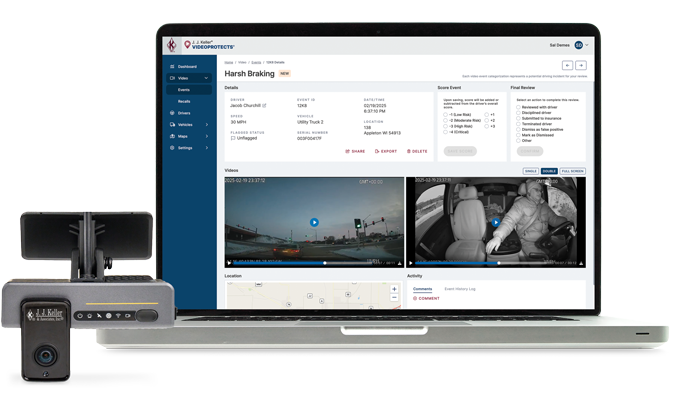
VideoProtects® Fleet Camera System
J. J. Keller’s VideoProtects® Fleet Camera System provides a full suite of safety features for improving driver safety and minimizing your fleet’s risk. Because it’s platform-independent, you can use it for any type of vehicles and with any fleet management software.
You may also enjoy the following articles:
Sign up for our newsletter!
We'll help you stay on top of regulations, best practices, and fleet industry news. Sign up to receive a monthly email notification with links to our most recent blog articles, free resources, and event invites.