Sr. Transportation Management Expert — J. J. Keller & Associates, Inc.
Seeing the Whole Picture: Making the Case for Driver-Facing Dash Cams
Driver-facing cameras often raise concerns among drivers and leadership, but they provide critical safety benefits beyond road-facing cameras.
Published On: 12/01/2025

Written by:
Mark Schedler
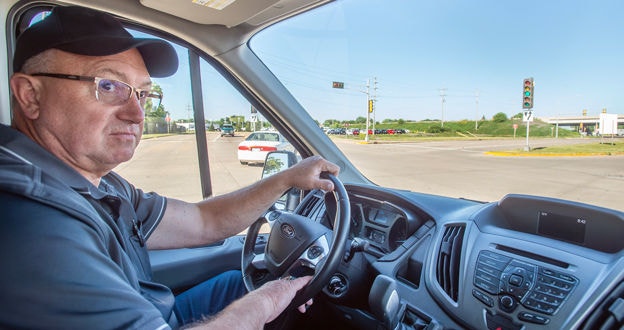
Driver-facing cameras (DFCs) often raise concerns among drivers and leadership, but they provide critical safety benefits beyond road-facing cameras. These devices offer a more complete view of events leading up to a crash, strengthening a carrier’s safety program.
Why DFCs should matter to drivers and leadership
Driver acceptance should start with conveying what's in it for the drivers. Many drivers fear that their career will end due to a wrongful accusation or death in a crash.
Exoneration: The passenger vehicle driver is at fault in at least 70% of fatal truck-passenger vehicle-involved crashes, according to Department of Transportation (DOT) statistics. Exoneration of a driver is not only possible, it’s probable. DFCs provide additional evidence to support exoneration or establish facts.
Survival: Even more importantly, when drivers operate unbelted, they had a 69.3 percent greater chance of dying in a DOT crash according to FMCSA statistics in 2022. Those who were unbelted were nearly 75% likely to be ejected from the truck, which is almost always fatal.
The April 2023 American Transportation Research Institute (ATRI) study “Issues and Opportunities with Driver-Facing Cameras (DFC)” found:
- DFC footage helps exonerate commercial truck drivers in 49 percent of litigation cases and 52 percent of insurance claims where video footage was available.
- Driver approval of DFCs was 87 percent higher when the video footage is used for coaching and training to avoid crashes versus when there was no proactive safety use.
Leadership support is equally vital. Preventing even one severe distracted or fatigued driving crash can offset system costs. ATRI research shows drivers convicted of inattentive or fatigued driving are 62% more likely to have a future crash. Coaching with DFC footage helps reduce these risks and counters false distraction claims.
Improving Acceptance
Retention and safety improve when coaching focuses on eliminating unsafe habits and recognizing positive performance. Key policy considerations include:
- Obtain driver consent for video and biometric data.
- Define recognition and reward practices.
- Target high-risk behaviors (e.g., distraction, drowsiness, seat belt use).
- Avoid over-coaching minor incidents.
- Limit recording to short clips around triggered events; avoid continuous recording and when the ignition is off.
- Restrict video access to safety managers; prohibit real-time monitoring except in emergencies.
- Ban audio recording to protect privacy and comply with consent laws.
Transition Strategy
A successful rollout should:
- Reinforce goals—driver retention, crash reduction, business protection.
- Pilot DFCs with select groups for 2–3 months.
- Establish a baseline period without coaching.
- Focus on high-risk locations.
- Include respected drivers and skeptics in test groups.
- Incorporate feedback and adjust.
- Share results transparently.
- Train coaches for effective behavior change.
- Develop performance metrics and incentives.
- Publicize exoneration successes while respecting privacy.
Conclusion
When paired with coaching, DFCs reduce crash risk, improve driver exoneration rates, and support retention.
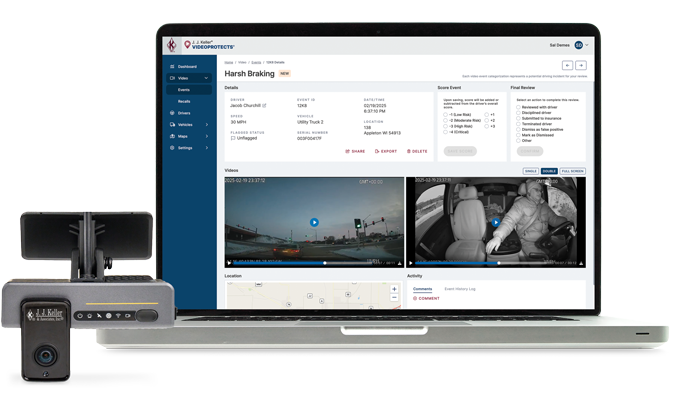
VideoProtects® Fleet Camera System
J. J. Keller’s VideoProtects® Fleet Camera System provides a full suite of safety features for improving driver safety and minimizing your fleet’s risk. Because it’s platform-independent, you can use it for any type of vehicles and with any fleet management software.
You may also enjoy the following articles:
Sign up for our newsletter!
We'll help you stay on top of regulations, best practices, and fleet industry news. Sign up to receive a monthly email notification with links to our most recent blog articles, free resources, and event invites.