Industry Business Advisor — J. J. Keller & Associates, Inc.
Fleet Dash Cameras: Your Top Questions Answered (FAQ)
Whether you’re just starting your research or evaluating upgrades, this FAQ breaks down the essentials every fleet manager should know.
Published On: 01/29/2026


Written by:
Tim Adam
Dash cameras have become one of the most effective tools for improving fleet safety, reducing insurance costs, and protecting drivers. Whether you’re just starting your research or evaluating upgrades, this FAQ breaks down the essentials every fleet manager should know.
How do dash cameras work?
Dash cameras record video (and often audio and telematics data) from inside and outside the cab. Most fleet‑grade cameras use wide‑angle lenses to detect sudden movements like hard braking or collisions. Many systems upload clips to the cloud in real time, allowing safety teams to review events quickly and coach drivers. Advanced models can also use AI to detect risky behavior such as following too closely, distraction, or lane departure.
What are the best camera options for drivers?
The best dash cameras typically feature dual‑facing or multi‑facing lenses that capture the road, cabin, and side views to provide a complete picture of every trip. They also include AI‑powered driver monitoring that supports proactive coaching by identifying risky behaviors in real time. Built‑in GPS and telematics integration add valuable context by linking video to precise location data and vehicle activity, making incident review far more accurate.
Do dash cameras work when the vehicle is off?
Some dash cameras support parking mode, allowing recording when the truck is turned off. These features can capture break‑ins, hit‑and‑runs, or vandalism. However, enabling off‑ignition recording typically requires a constant‑power connection. Not all fleets choose this option, so it’s important to confirm whether you need or want it.
How do I get buy-in from the drivers?
Earning buy‑in starts with communication. Before installing anything, hold open discussions explaining how and why the system is being rolled out. Emphasize the role cameras play in preventing accidents, not monitoring drivers unnecessarily. Drivers want to know who can see the footage, when it’s reviewed, and how long it’s stored. Clear rules increase trust and reduce the feeling of being watched.
Nothing changes minds like real examples. Sharing anonymous instances of driver exoneration demonstrates the personal benefits of cameras—and can turn skeptics into advocates.
What camera is best for my fleet?
Choosing the right dash camera involves more than comparing price tags. There are many options available in modern cameras. High resolution recording helps collect clear evidence. GPS tracking can help determine the speed of travel and location of the vehicle, which can be helpful in the event of an incident. AI powered cameras can recognize things like fatigue and distracted driving.
Choose a camera that meets the primary objectives that you are prioritizing. Are you looking for ways to document incidents, reduce liability, save on insurance or, coach driver skills? Different dash cam platforms excel in different areas, and the right choice depends on your goals.
My fleet has a great safety rating, do I really need cameras?
This is one of the most common and most valid questions fleet managers ask. Dash cams provide video evidence that resolves disputes quickly and protects your fleet financially. They also help secure insurance discounts and lower long-term premiums. Even top-performing fleets benefit from proactive coaching features like real-time driver alerts, fatigue detection, and AI-powered monitoring, tools that help maintain your already high standards and reduce risk even further.
When paired with transparent communication and thoughtful implementation, dash cameras become a tool drivers support, not something they feel threatened by.
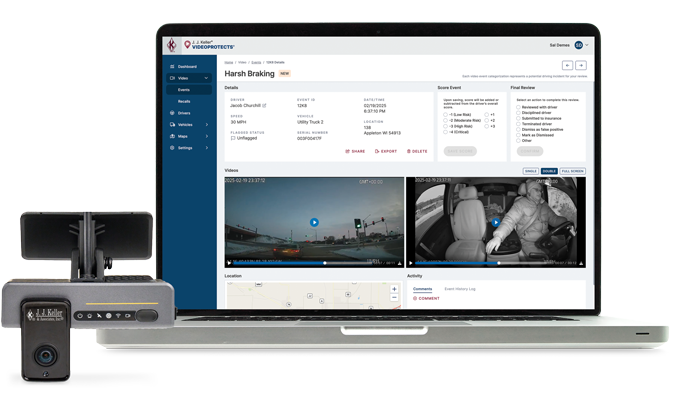
VideoProtects® Fleet Camera System
J. J. Keller’s VideoProtects® Fleet Camera System provides a full suite of safety features for improving driver safety and minimizing your fleet’s risk. Because it’s platform-independent, you can use it for any type of vehicles and with any fleet management software.
You may also enjoy the following articles:
Sign up for our newsletter!
We'll help you stay on top of regulations, best practices, and fleet industry news. Sign up to receive a monthly email notification with links to our most recent blog articles, free resources, and event invites.