Industry Business Advisor — J. J. Keller & Associates, Inc.
Debunking the biggest myths about video telematics in commercial motor vehicles
Separating Fact From Fiction to Reveal the Real Safety Value of Video Telematics
Published On: 04/09/2026

Written by:
Tim Adam
Video telematics systems are no longer reserved for large fleets. Yet many carriers still hesitate to adopt them, often based on common misconceptions rather than facts.
Let’s address some of the most common myths about video telematics for commercial motor vehicles (CMVs), explain why they miss the mark, and highlight the real benefits fleet safety technology provides when implemented correctly.
Myth #1 Video telematics are intrusive and are only used to micromanage drivers.
The concern is that telematics will constantly watch over the driver’s shoulder, or trigger supervisors to discipline them for a minor issue. The reality is that telematics are about visibility, consistency, and protection. When properly used, telematics allow coaching to be based on trends, not single occurrences, and often reduce conflict because conversations shift from “he said/ she said” to data driven conversations.
This results in drivers being treated more fairly. Good driving is reinforced, and coaching focuses on improvement, not punishment.
Myth # 2 Drivers will never accept telematics.
Carriers worry that telematics will harm morale or increase turnover. Driver acceptance of telematics depends almost exclusively on how the system is rolled out. Successful fleets communicate new systems in advance, clearly explain why the program is being implemented, and share how the data will (and will not) be used. When drivers understand how telematics protect them, many become advocates for them.
The result can be increased morale based on management transparency. Everyone wants to feel included, and drivers are no different.
Myth #3 Cameras only exist to catch drivers doing something wrong.
A frequent concern among drivers is the assumption that camera systems exist only for disciplinary purposes or termination, rather than as a safety and coaching compliance tool.
The purpose of fleet safety cameras in all operations should be first and foremost to protect drivers.
Forward facing cameras provide factual details during crashes, protect drivers from false claims, demonstrate safe driving patterns, and are particularly important to support DataQ challenges and Crash Preventability Determination Program (CPDP) submissions.
Ethically used driver-facing cameras can help identify fatigue, distracted driving trends, and areas where drivers need more training.
Discipline should be the exception, not the rule. The most effective use of camera footage is coaching, recognition, and defense. Drivers gain a digital “witness” that tells their side of the story when it really matters.
When implemented correctly, telematics serve as a powerful safety and risk management tool for CMV operations. Beyond technology, it provides visibility that helps carriers protect drivers, prevent crashes, improve compliance, and reduce costs.
Telematics support proactive coaching, objective decision making, and continuous improvement. This shifts the focus from punishment to prevention. Ultimately, the greatest value lies in fostering a culture of accountability, safety, and operational excellence that benefits drivers, carriers, and the motoring public alike.
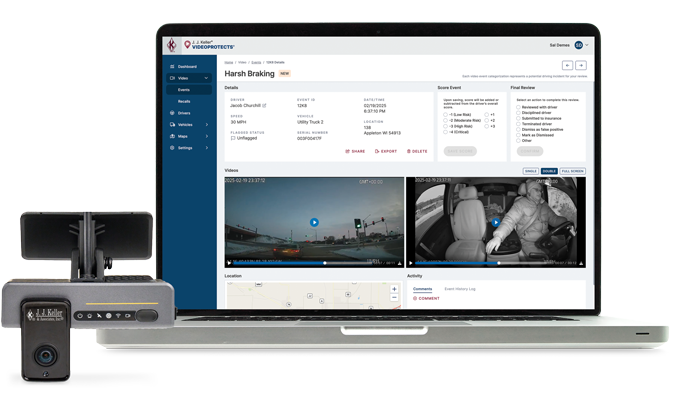
VideoProtects® Fleet Camera System
J. J. Keller’s VideoProtects® Fleet Camera System provides a full suite of safety features for improving driver safety and minimizing your fleet’s risk. Because it’s platform-independent, you can use it for any type of vehicles and with any fleet management software.
You may also enjoy the following articles:
Sign up for our newsletter!
We'll help you stay on top of regulations, best practices, and fleet industry news. Sign up to receive a monthly email notification with links to our most recent blog articles, free resources, and event invites.