Industry Business Advisor — J. J. Keller & Associates, Inc.
Seeing More, Protecting More: Why Auxiliary Cameras Are a Smart Investment for Fleet Safety
Auxiliary camera systems help fleets reduce blind spots, improve driver visibility, prevent costly accidents, and gain a more complete view of on-road events.
Published On: 09/02/2026

Written by:
Josh Lovan
When most people think of fleet safety cameras, they picture a traditional forward-facing dash cam mounted on the windshield. While road-facing cameras provide valuable evidence and insight into driving events, they only tell part of the story. Auxiliary cameras, including side-view cameras, blind spot cameras, cargo-area cameras, and rear-facing cameras, help fleets capture a more complete picture of what is happening around their vehicles. As part of a comprehensive commercial vehicle camera system, these additional views create opportunities to reduce accidents, improve driver performance, and strengthen a company's commitment to safety.
Commercial vehicles routinely operate in environments where visibility is limited. Tight loading docks, crowded truck stops, urban delivery routes, construction sites, and customer facilities can all present challenges that are difficult to navigate using mirrors alone. This is where fleet video monitoring technology and auxiliary camera systems can make a significant difference.
Key Benefits of Auxiliary Cameras
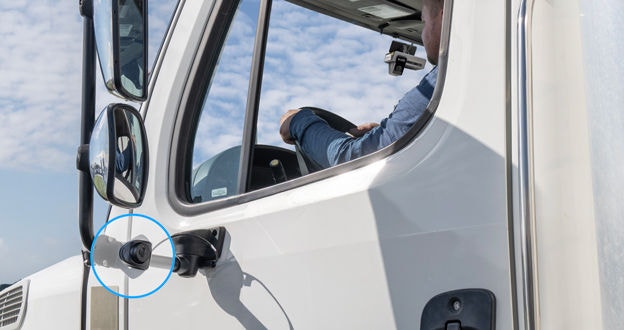
Auxiliary cameras provide drivers with visibility that mirrors alone cannot offer. Whether mounted on the sides of the vehicle, near the cargo area, or at the rear, these additional camera angles can help fleets:
- Reduce blind spots during lane changes and turns
- Improve visibility while backing into docks and tight spaces
- Help identify pedestrians, cyclists, and nearby vehicles
- Prevent low-speed accidents and property damage
- Provide additional evidence during incident investigations
- Support more effective driver coaching
- Increase driver confidence in challenging situations
Side-mounted cameras provide drivers with additional visibility of blind spots and adjacent lanes, helping them identify pedestrians, cyclists, passenger vehicles, and other hazards that may otherwise go unnoticed. This added perspective can be especially valuable during lane changes, turns, and low-speed maneuvering where a momentary blind spot can lead to a costly collision. For fleets seeking to improve safety performance, blind spot camera systems for trucks and commercial vehicles can be a valuable addition to their safety program.
Cargo and rear-facing cameras offer similar advantages. Backing incidents remain one of the most common types of fleet accidents because drivers often have limited visibility behind the vehicle. A cargo or rear camera gives drivers a clear view of obstacles, equipment, parked vehicles, and pedestrians before and during backing maneuvers. This added awareness can help prevent property damage, injuries, and the downtime associated with avoidable incidents. Many fleets include these cameras as part of a broader truck camera system designed to improve visibility in every direction.
Beyond accident prevention, auxiliary cameras create valuable coaching opportunities. Video footage from multiple angles allows fleet managers to better understand what occurred during a driving event and provide more effective feedback. Rather than relying on assumptions or incomplete information, supervisors can review the full situation and work with drivers to identify safer techniques. This approach helps build trust while supporting continuous improvement and professional development. Combined with video telematics solutions, auxiliary cameras provide actionable insights that can improve driver behavior and reduce risk.
Additional camera angles can also provide protection when questions arise after an incident. A side camera may capture a vehicle cutting into a truck's blind spot. A cargo camera may show that a driver followed proper backing procedures. Having multiple viewpoints often helps clarify events more quickly and can reduce disputes regarding what actually occurred. For fleets using fleet management and video monitoring solutions, this additional context can be invaluable when investigating claims and protecting drivers.
Perhaps most importantly, auxiliary cameras send a clear message that safety is a priority. Investing in auxiliary cameras demonstrates that a company is committed to providing drivers with the tools they need to operate safely and confidently. Drivers gain better visibility, fleets gain greater insight, and everyone benefits from a stronger safety culture.
When fleets can see more, they can protect more, reducing risk while helping drivers perform at their best every day. By incorporating fleet safety technology, commercial vehicle camera systems, and video telematics, organizations can create a safer and more efficient operation for drivers, vehicles, and customers alike.
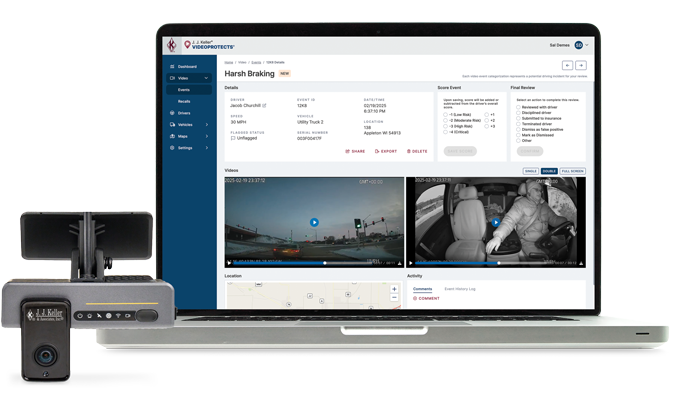
VideoProtects® Fleet Camera System
J. J. Keller’s VideoProtects® Fleet Camera System provides a full suite of safety features for improving driver safety and minimizing your fleet’s risk. Because it’s platform-independent, you can use it for any type of vehicles and with any fleet management software.
You may also enjoy the following articles:
Sign up for our newsletter!
We'll help you stay on top of regulations, best practices, and fleet industry news. Sign up to receive a monthly email notification with links to our most recent blog articles, free resources, and event invites.